Earl’s Story: The personal journey, the connection to the firearm’s design, and the family legacy at North American Arms.
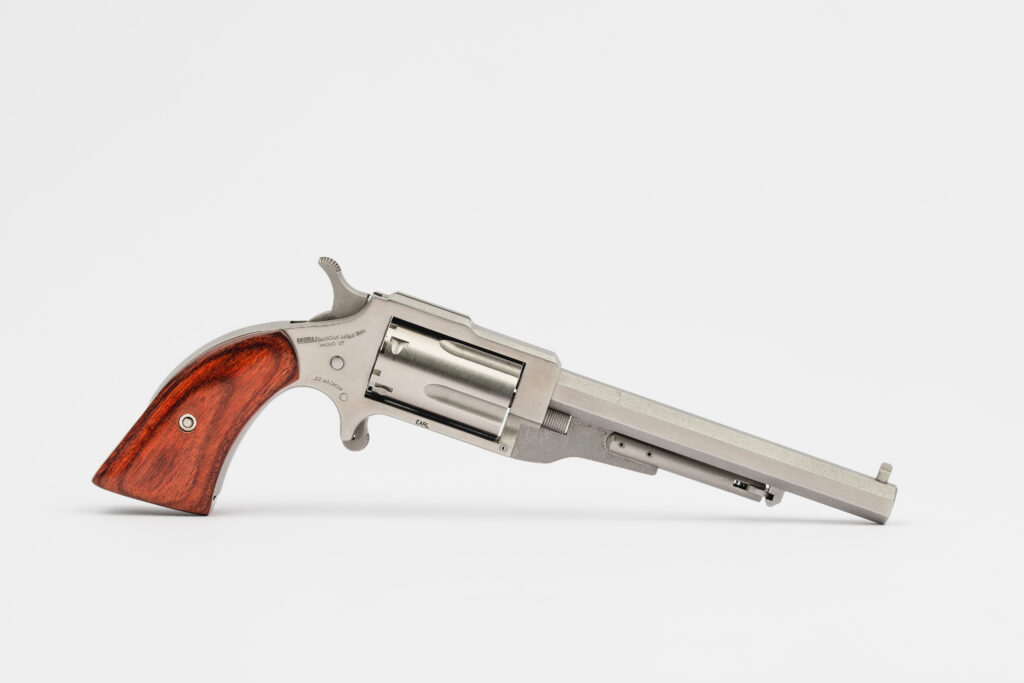
Long before he ever put pen to paper or metal to a mill, Earl possessed a deep, lifelong fascination with the American Old West. As a father, he eagerly shared this world with his boys. His children recall that their childhood vacations were defined by routine road trips to historic sites like the Battle of Little Bighorn. Through watching historical reenactments together, he passed down a vivid memory of that rugged era to his sons. This passion extended directly to the iconic firearms of the 19th century. He deeply admired the classic aesthetic of old Colt and Remington revolvers, particularly falling in love with the look of the heavy octagon barrel. His ultimate goal was to capture that timeless cowboy spirit in steel, making it entirely his own.
The Long Road to Gunsmithing
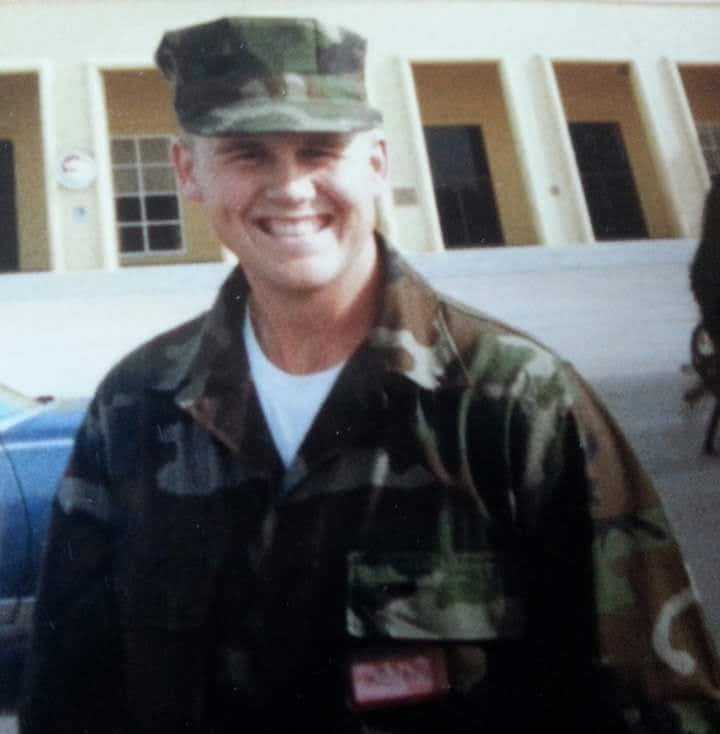
The path to creating his signature firearm was far from direct. In his younger years, he served a standard tour of military service in the U.S. Marines, traveling across East Asia to Korea, Japan, Okinawa, and the Philippines. Upon returning home to Southern Idaho, he transitioned into civilian public service, spending roughly 17 years working as an EMT and a Search and Rescue Reserve Deputy. However, life took a series of difficult turns. Following marital separation and the loss of his EMT job, he decided to formally pursue his passion, enrolling in the Trinidad School of Gunsmithing in Colorado in the early 2000s. Despite completing the two-and-a-half-year program, personal hardships and mental struggles continued to follow him. He faced periods of homelessness and instability before eventually relocating to Utah, where he landed a job at North American Arms in October of 2006.
Birth of a Prototype
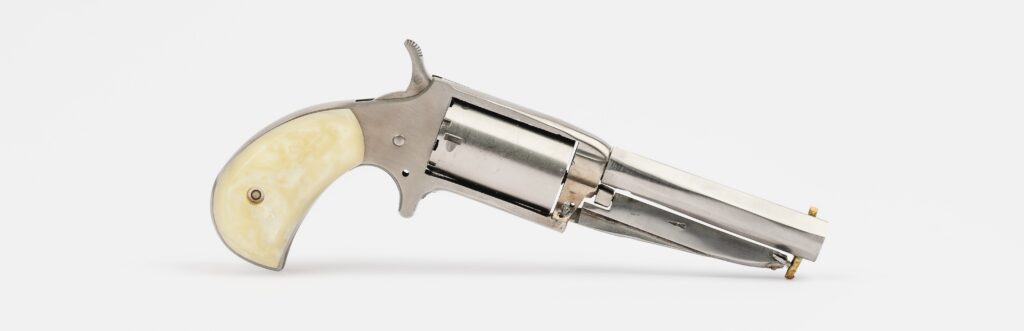
Once at NAA, his lifelong dream began to materialize. Around April of 2007, he began using his work breaks to sketch out concepts and manually machine parts. His process was raw and instinctual. He took a frame from an NAA Mini-Master and began cutting it down on a manual mill. As he was not a professional free-hand machinist, these initial cuts were rough. Yet, by late July of 2007, he completed two working conceptual samples. They featured the distinct octagon barrel and an early variation of a multi-piece loading lever—capturing the exact “cowboy look” he had chased for decades.
Tragedy and Transition
Tragically, Earl never got to see his vision reach the public. Just a couple of weeks after finishing his rough prototypes in August 2007, he succumbed to severe mental hardships and took his own life. Following his sudden passing, NAA tasked it’s machinists to interpret his original notes and rough models to create a show-worthy prototype. The revolver went through several more iterations of prototyping as the team worked out the final manufacturing details. These refined iterations were brought to the annual SHOT Show to gauge customer interest. The design was a resounding success. “The Earl” officially entered full manufacturing production in 2009.
A Family Legacy Alive at the Line
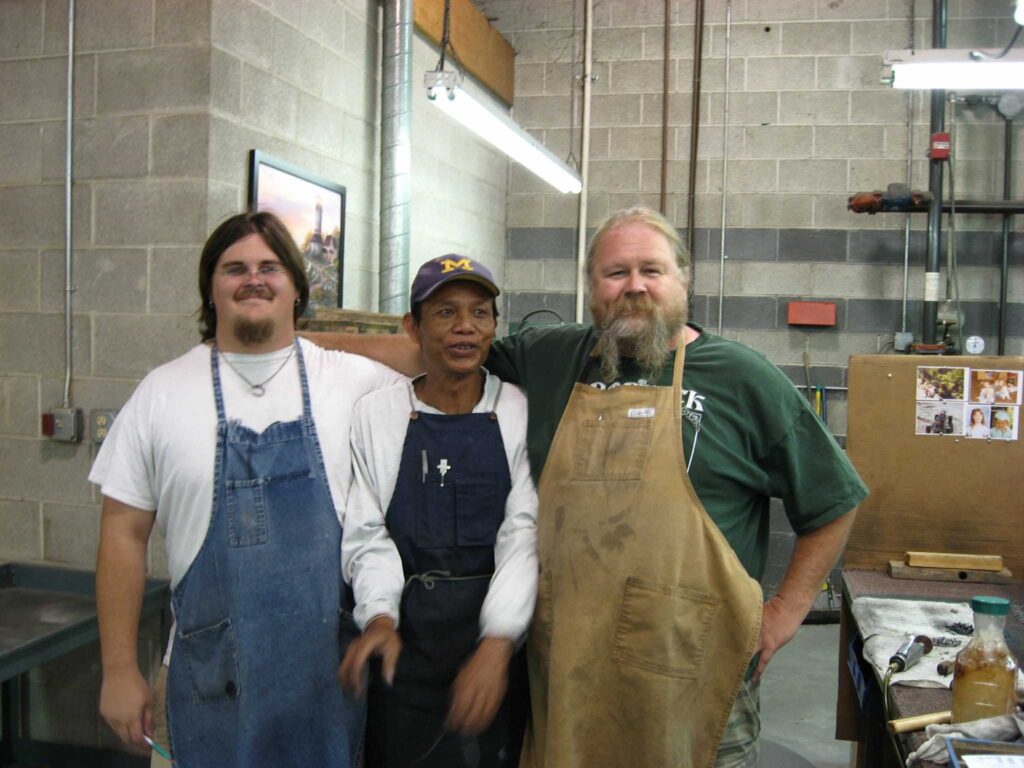
Though the story is marked by tragedy, its legacy remains vibrant and deeply personal within the walls of North American Arms. In January 2007, just months before his death, Earl Hubbard called his oldest son Dustin, urging him to come down to Utah for a fresh start and a guaranteed job. His son accepted, found a natural talent for the manufacturing work, and built a career there. Later, his younger son Dalton was promised a position at the factory, starting his very first day of work on his 18th birthday. The youngest son, Duncan, has also contributed his efforts to the NAA production floor.
Today, Dustin and Dalton are highly respected pillars of the production floor and are vital to North American Arm’s ongoing success. All three sons keep their father’s memory alive. They have preserved the very first prototypes their father meticulously carved out by hand. Through their continued dedication, and through every octagon-barreled revolver that leaves the factory floor, the cowboy spirit of their father lives on.
Additional Resources
Responsible firearm ownership often includes having a home defense plan in place, something you hope you’ll never need but are glad to have if the moment comes. The same principle can apply to mental health. Walk the Talk America offers free and anonymous mental health screenings and resources to help individuals create a personal mental health plan before a crisis occurs. Learn more at WTTA.org.